
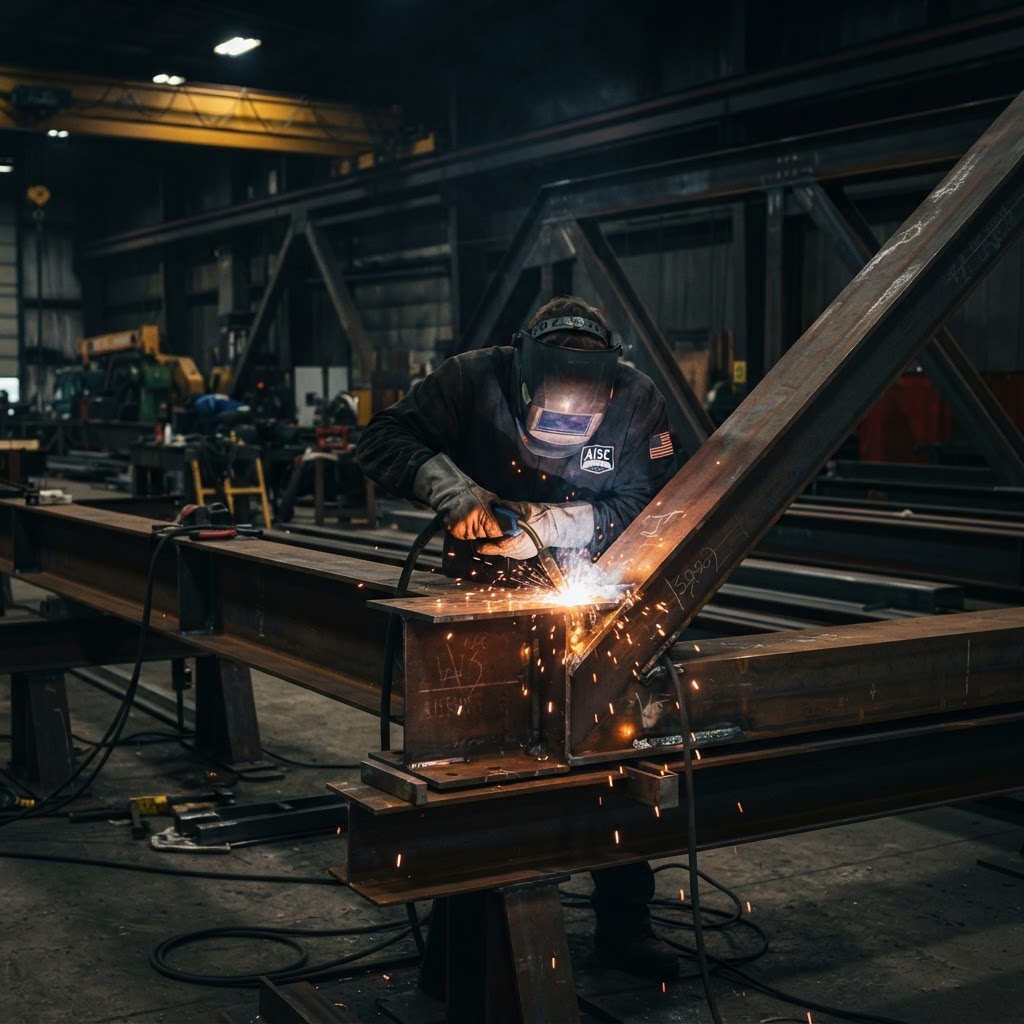
How to Vet a Structural Steel Fabricator: What GCs and DOT Project Managers Should Verify Before Awarding a Contract
When a project calls out for structural steel or bridge components, the fabricator selection process often gets compressed into a line-item comparison of price and lead time. But for general contractors, engineers, and DOT project managers, the fabricator you choose has downstream effects on schedule reliability, inspection outcomes, and long-term structural performance. Understanding what separates a qualified structural steel shop from a general metal fabrication outfit can save significant time and risk exposure later in a project.
This article breaks down the key factors worth evaluating when sourcing structural steel or bridge fabrication work, particularly for projects that require certified quality systems and DOT compliance.
Why AISC Certification Matters More Than Most Specs Realize
AISC (American Institute of Steel Construction) certification is frequently listed as a project requirement, but many estimators don't fully understand what it verifies. AISC certification isn't a one-time credential—it's an ongoing audit process that evaluates a fabricator's quality management system, not just their equipment or welder qualifications.
A certified fabricator has documented procedures covering:
- Material traceability from mill certification through final erection
- Welding procedure specifications (WPS) and welder qualification records
- Dimensional tolerance control and inspection checkpoints
- Nonconformance reporting and corrective action processes
For a GC or engineer, this matters because it shifts quality assurance from something you have to police on-site to something embedded in the fabricator's daily operations. When a project spec calls for AISC Certified fabrication, it's effectively asking for a paper trail that can withstand third-party audit and reduce the likelihood of field rework.
What to Ask For
Don't just accept a certificate number. Ask for the specific certification category (such as Conventional Steel Building Structures, Bridge and Highway Metal Components, or Major Steel Bridges), since these categories reflect different audit scopes and complexity thresholds.
Structural Steel vs. General Metal Fabrication: Know the Difference
Searches for "metal fabrication near me" often return a mix of shops—some suited for structural work, many not. It's worth understanding the practical differences before requesting quotes.
General metal fabrication shops typically handle custom brackets, equipment enclosures, architectural metalwork, and light gauge assemblies. Structural steel fabrication, by contrast, involves:
- Heavy plate and wide-flange beam processing
- Certified welding procedures tested to AWS D1.1 or D1.5 (for bridges)
- Engineering review of connection design and shop drawings
- Coordination with structural engineers of record for RFIs and submittals
A shop without structural certification may still produce quality welds, but it likely lacks the documented WPS library, welder continuity records, and third-party inspection protocols that structural and bridge work demands. For DOT projects specifically, this distinction isn't optional—AWS D1.5 bridge welding code has stricter qualification and inspection requirements than standard structural steel code, including additional nondestructive testing (NDT) provisions for tension welds.
Bridge Fabrication: Where Tolerances and Documentation Diverge from Building Steel
Bridge fabrication carries a different risk profile than vertical building construction, and DOT project managers evaluating fabricators should look for shop experience specific to this category.
Fatigue-Sensitive Design Considerations
Bridges are subject to cyclical loading that building steel typically isn't. This means weld details, especially at transitions and connections, must account for fatigue categories defined in AASHTO specifications. A fabricator experienced in bridge work will flag potential fatigue-sensitive details during shop drawing review rather than fabricating strictly to plan without comment—a distinction that matters when field conditions or minor design ambiguities arise.
Charpy V-Notch and Material Toughness Requirements
Bridge steel often requires Charpy V-Notch (CVN) impact testing to verify toughness at specified temperatures, particularly for fracture-critical members. This requirement is frequently overlooked in initial material takeoffs but becomes a scheduling issue if the fabricator hasn't sourced CVN-tested plate in advance. Ask early whether your project includes fracture-critical members (FCMs), since these require additional fabricator qualifications under AASHTO/AWS D1.5 and typically involve enhanced NDT and documentation.
NDT and Inspection Coordination
DOT bridge projects typically require ultrasonic testing (UT), magnetic particle testing (MT), or radiographic testing (RT) at specified weld locations, often performed by an independent inspection agency. A fabricator with in-house NDT-qualified personnel, or established relationships with third-party inspection firms, can significantly reduce inspection scheduling delays that otherwise stack up during peak construction season.
Evaluating Shop Capacity and Lead Time Realistically
One of the most common project delays traces back to underestimating fabrication lead time relative to actual shop capacity. A 60,000-square-foot facility sounds substantial, but capacity is really a function of:
- Current backlog and committed tonnage
- Crane capacity and bay clearance for oversized members
- In-house cutting, drilling, and welding automation versus manual processes
- Coating and galvanizing coordination (in-house vs. outsourced)
When requesting a quote, ask for a realistic fabrication schedule based on current shop load, not just a standard lead time quoted for every project. Also ask how the shop handles overflow or subcontracted processes like blast and paint, since outsourced steps often become the actual bottleneck in a delivery schedule.
Shipping and Logistics for Oversized Members
For projects requiring nationwide shipping of large structural or bridge components, confirm early whether the fabricator handles permitting and routing for oversized loads, or whether that responsibility falls to a third-party trucking coordinator. Oversized member transport requires state-specific permits and route surveys that can add days to a schedule if not planned in parallel with fabrication.
Conclusion
For GCs, engineers, and DOT project managers, selecting a structural steel or bridge fabricator is a risk management decision as much as a procurement one. AISC and AWS certifications, documented welding procedures, fatigue and toughness considerations for bridge work, and realistic shop capacity assessments all factor into whether a project stays on schedule and passes inspection without costly rework. Taking the time to verify these details during the bid phase, rather than discovering gaps during fabrication or field erection, remains one of the most effective ways to protect both budget and timeline on structural steel projects.