
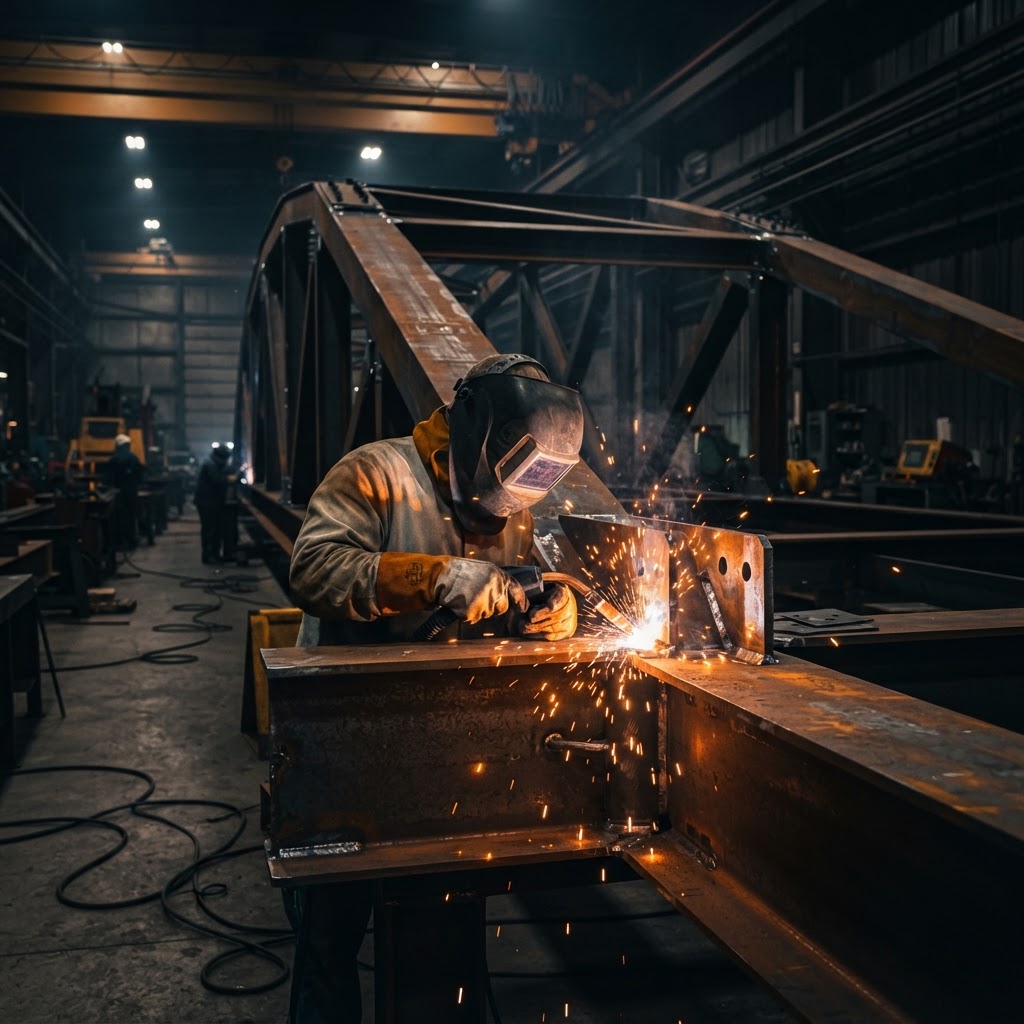
What AISC Certification Actually Tells You About a Steel Fabricator
When a general contractor or DOT project manager is searching for a structural steel or bridge fabricator, the name of the company matters far less than what's behind it. Specifications almost always call out AISC certification as a requirement, but many people involved in procurement don't fully understand what that certification represents, how it's earned, or why it matters once steel is in the field. Understanding the substance behind the credential helps project teams ask better questions during bid evaluation and avoid costly surprises during erection.
What AISC Certification Actually Audits
The American Institute of Steel Construction runs a certification program that goes well beyond a one-time inspection. Fabricators seeking certification undergo a detailed audit of their quality management system, covering everything from how contracts are reviewed at the estimating stage to how finished members are handled, stored, and shipped.
Auditors look at documented procedures for:
- Material traceability from mill certification through fabrication
- Welding procedure specifications and welder qualification records
- Dimensional control and tolerance verification
- Nonconformance identification and corrective action
- Personnel qualifications, including certified welding inspectors on staff
This isn't a paperwork exercise. Auditors walk the shop floor, review actual job files, and interview personnel. Certification is renewed on a recurring cycle, which means a fabricator has to maintain these systems continuously, not just perform well during a single audit window.
Why This Matters for Bridge Work Specifically
Fabricators seeking to work on DOT bridge projects often need an additional, more rigorous endorsement beyond standard structural steel certification. Bridge certification categories address fracture-critical material handling, more stringent weld inspection requirements, and additional documentation tied to fatigue-sensitive connections. A fabricator holding a bridge-specific endorsement has demonstrated competency in work where a weld defect has consequences far beyond cosmetic rejection.
Why Certification Should Change How You Read a Bid
For estimators comparing bids on a structural package, price is only part of the picture. A certified fabricator's pricing often reflects real costs that an uncertified shop may not be carrying: dedicated QC personnel, calibrated inspection equipment, document control systems, and ongoing training for welders to maintain qualifications.
When a bid comes in significantly under certified competitors, it's worth asking directly how the fabricator handles material traceability and weld inspection, even if they're not pursuing formal certification. Some capable regional shops operate without AISC certification and still produce excellent work, but the burden shifts to the contractor to verify quality systems independently rather than relying on third-party audit.
Material Traceability: The Detail Everyone Assumes Is Handled
One of the most underappreciated aspects of structural steel fabrication is traceability of mill material back to its heat number. Specifications for structural and bridge work typically require that certified mill test reports can be matched to the physical piece installed in the structure. This matters most when a question arises after erection: if a crack, deformation, or performance issue is discovered, traceability determines whether the issue can be isolated to a specific heat of steel or whether the entire structure's material history is in question.
Fabricators with mature quality systems tag and track material from the moment it arrives on a flatbed through cutting, fit-up, welding, and shipping. Ask prospective fabricators how they maintain this chain, particularly on multi-piece girder or truss packages where dozens of individual members may originate from different heats.
Welding Quality Control That Goes Beyond the Weld Itself
Structural welding quality is often discussed only in terms of visual inspection or whether a welder holds current certification. Those are necessary but not sufficient. A mature fabrication quality program also addresses:
Procedure Qualification
Every welding procedure used on a job should be qualified for the specific joint configuration, material thickness, and process being used. A welder certified to a procedure in one position and thickness range isn't automatically qualified outside that range.
Preheat and Interpass Temperature Control
For thicker structural members, particularly in colder climates or on larger bridge girders, preheat and interpass temperature control prevents hydrogen cracking. Shops without disciplined temperature monitoring can produce welds that pass visual inspection but carry hidden risk.
Nondestructive Testing Coordination
Ultrasonic and magnetic particle testing requirements vary by connection type and project specification. Coordinating NDT scheduling into the fabrication sequence, rather than treating it as an afterthought, prevents schedule delays caused by failed tests discovered late in the process.
Practical Questions for Evaluating a Fabricator
Whether a project team is comparing bids or vetting a shop for a long-term relationship, a few direct questions reveal more than a certification logo on a letterhead:
- Can you provide documentation of your current AISC certification category and scope?
- How do you handle material traceability on multi-piece orders?
- What is your typical lead time for shop drawings and approval cycles on a project of this size?
- Do you have in-house capacity for NDT, or is it subcontracted?
- How does your shop handle nonconformance when a dimensional or weld issue is discovered internally before shipment?
The answers to these questions tell a project manager far more about real capability than square footage of shop space or years in business alone, though both of those factors matter too when evaluating capacity for larger structural or bridge packages.
Conclusion
AISC certification exists because structural and bridge steel carry consequences that go beyond typical construction tolerances. Understanding what the certification audits, how traceability and welding quality control actually function in a shop, and what questions separate a strong fabricator from an average one gives contractors, engineers, and project owners a real advantage during procurement. The credential is a useful signal, but the underlying quality systems it represents are what actually protect a project's schedule, budget, and long-term structural integrity.